
System 01
Industrial Epoxy Flooring
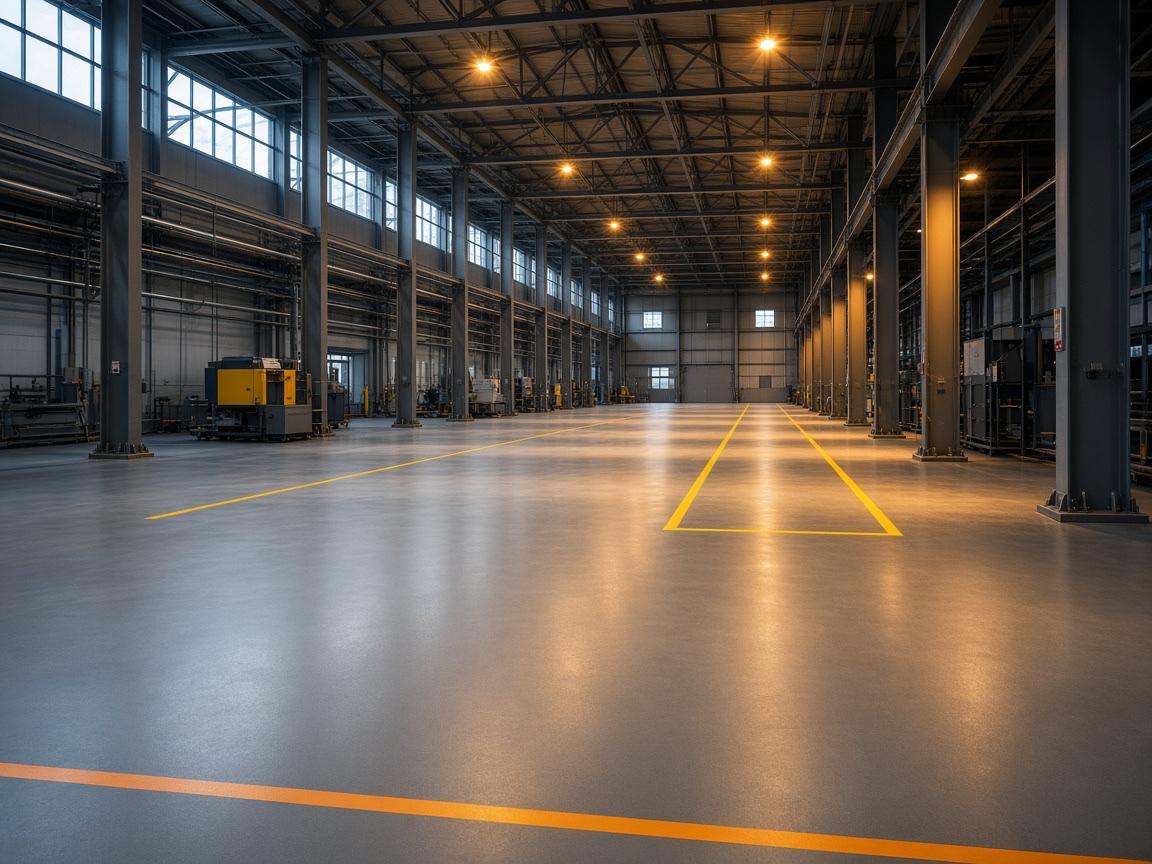
Industrial epoxy flooring is a resin system installed over prepared concrete to create a continuous working surface. TIMEXO specifies it when the floor must handle abrasion, forklift movement, spill exposure and daily cleaning — with build-up chosen after the substrate and operating conditions are clear.
System profile
Specification starts with the operating environment.
Performance
What the system is designed to support.
- Hard-wearing surface for continuous traffic and point loads
- Seamless finish that supports clean, controlled operations
- Chemical and oil resistance when the system is correctly matched
- Protects the concrete slab from wear, impact and contamination
- Optional anti-slip texture where pedestrian safety requires it
- Can improve light levels through a reflective, uniform finish
Applications
Typical environments.
- Manufacturing bays
- Workshops
- Warehouses
- Service areas
- Manufacturing
- Warehousing
- Automotive
Installation sequence
From substrate condition to final handover.
- 01Site and substrate assessment
- 02Repair, degrease and mechanical preparation
- 03Primer coat for adhesion
- 04Build and finish coats
- 05Cure, inspection and handover
Considerations
What should be reviewed before specification?
- The concrete must be fully cured, sound and free of grease, laitance and weak surface layers before coating.
- Sealed or polished slabs often need further preparation — if water beads instead of soaking in, bond risk is high.
- Cracks, chips and joints should be repaired so the resin sits on a stable plane.
- Ambient and slab temperature affect mix behaviour, cure and final film quality; manufacturer windows must be followed.
- Once resin and hardener are mixed, the working time is limited — sequencing on site has to match pot life.
- Chemical exposure, impact zones and hygiene needs decide whether a standard industrial build-up is enough or a specialist system is required.
Maintenance
Performance continues after installation.
Keep abrasive grit off traffic lanes, clean to the facility protocol, and inspect turning zones, loading points and spill areas before wear becomes a repair job. Compatible cleaners matter more than aggressive chemicals.
Questions
Useful answers before the site assessment.
Where is industrial epoxy flooring used?
It is commonly specified for factories, workshops, warehouses and service areas that need a durable, seamless surface under regular pedestrian, pallet or forklift traffic.
Why does surface preparation matter so much?
Epoxy bonds to a clean, slightly open concrete profile. Contamination, sealers or unsound concrete can stop adhesion and lead to peeling — preparation is part of the system, not an optional step.
Is a primer always required?
Most industrial epoxy systems use a primer to lock dust, improve adhesion and set up the build coats. The exact sequence depends on the product and the condition of the slab.
What affects the final specification?
Traffic, loads, chemistry, substrate moisture and condition, slip-resistance needs and the available installation and cure window all shape the build-up TIMEXO recommends.
Next step