
System 02
PU Flooring
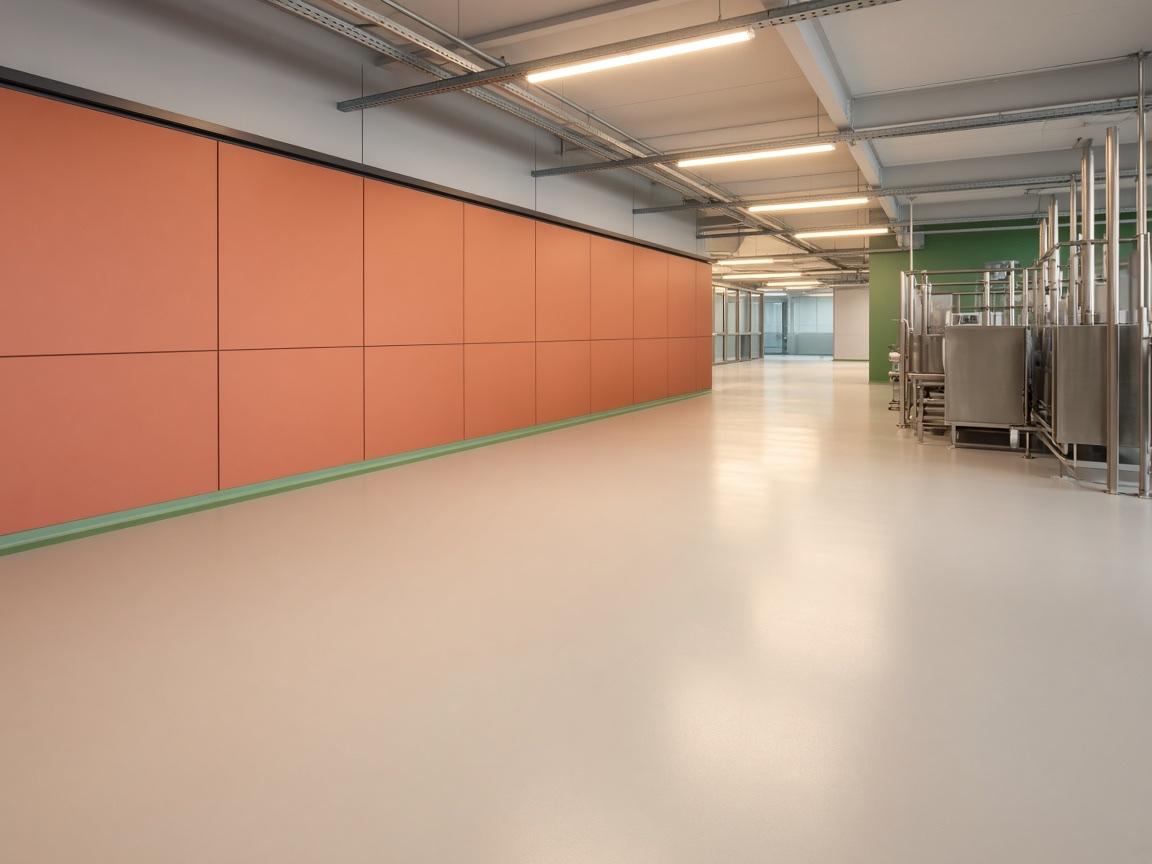
PU flooring is a polyurethane resin system used when the floor needs elasticity that a rigid epoxy film may not provide. TIMEXO specifies it for impact, temperature swing, thermal shock and certain process washdowns — after substrate moisture, chemistry and traffic are reviewed on site.
System profile
Specification starts with the operating environment.
Performance
What the system is designed to support.
- More elastic response under point loads and pallet-truck traffic than typical epoxy films
- Better tolerance of temperature movement and cold-store conditions when correctly specified
- Seamless surface suited to hygiene-led process areas
- Cementitious polyurethane options for hot washdown and aggressive cleaning regimes
- Aliphatic clear or topcoats where UV stability or scratch protection is required
- Can sit as a resilient wearing layer over a prepared industrial slab
Applications
Typical environments.
- Production lines
- Cold and process zones
- Loading areas
- Food & Beverage
- Automotive
- Pharmaceutical
Installation sequence
From substrate condition to final handover.
- 01Operating condition and moisture survey
- 02Substrate repair and mechanical preparation
- 03Primer or anchorage layer as specified
- 04Polyurethane body and finish coats
- 05Cure review and handover
Considerations
What should be reviewed before specification?
- Polyurethane systems are moisture-sensitive during application — substrate and ambient humidity must be controlled.
- Working time after mixing is often short; sequencing and crew size have to match the product pot life.
- Recoating cured PU is harder than epoxy because of its toughness — preparation between coats must be planned.
- Cold chambers, freezers and heat-cycle zones need a build-up chosen for thermal movement, not a generic industrial coat.
- Hot-water cleaning and acid exposure may require a cementitious polyurethane system rather than a thin coating.
- Outdoor or UV-exposed areas need UV-stable chemistry; standard aromatic systems are not assumed.
Maintenance
Performance continues after installation.
Clean to the process protocol, avoid incompatible solvents, and inspect impact lanes, washdown zones and temperature-transition areas before local damage spreads.
Questions
Useful answers before the site assessment.
When is PU flooring chosen instead of epoxy?
When the facility needs more elastic behaviour — for impact, cold rooms, thermal cycling or certain washdown conditions where a rigid epoxy film is a weaker match.
Are all PU floors the same thickness?
No. Systems range from thin roller-applied coats to thicker trowel-applied and cementitious builds. Thickness follows traffic, chemistry and thermal demand — not a fixed catalogue depth.
Why is installation more demanding than epoxy?
PU mixes are often less forgiving of moisture, dust and timing. Application windows are tighter, so surface condition and crew organisation matter more on the day.
Where does TIMEXO typically specify PU?
Production lines, cold or process zones, loading areas and facilities where temperature, impact or aggressive cleaning define the floor more than appearance alone.
Next step