
System 05
Warehouse Flooring
Warehouse flooring is specified around traffic patterns, load movement, pallet handling and the need to keep operations moving. The right solution balances surface durability, safety, maintenance and installation disruption.
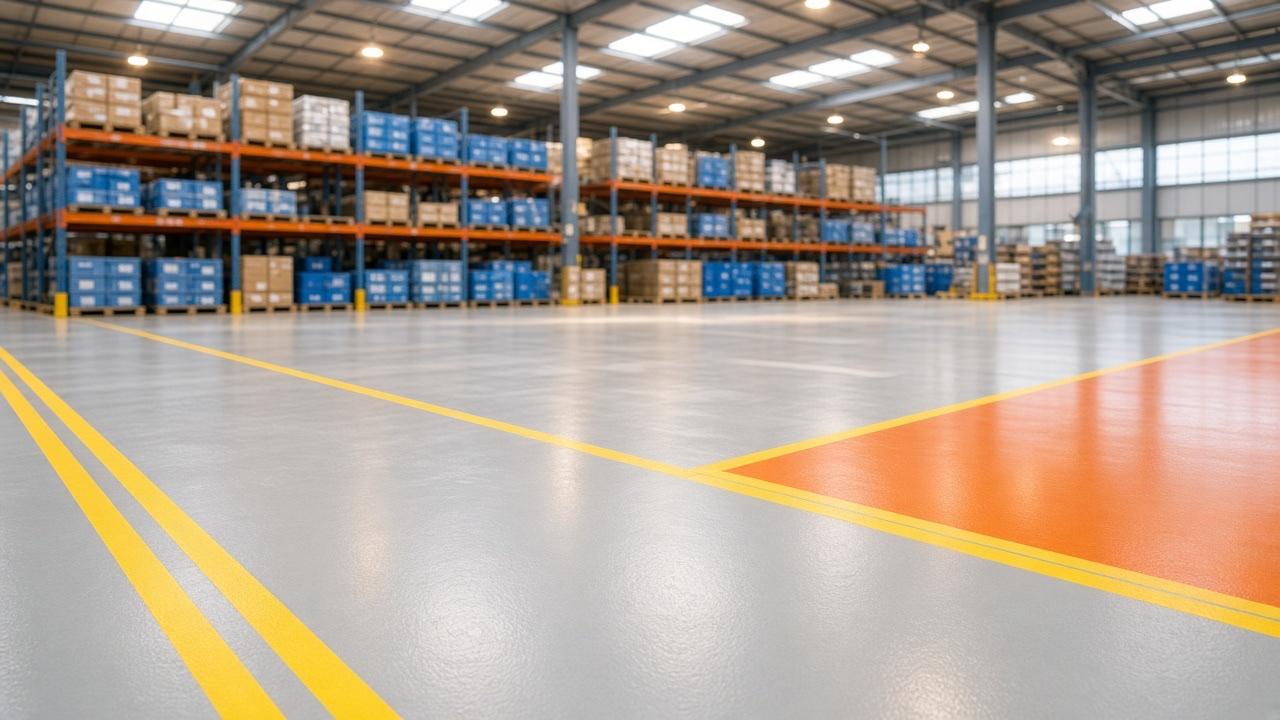
System profile
Specification starts with the operating environment.
Performance
What the system is designed to support.
- Supports repeated wheeled traffic
- Consistent surface for material movement
- Designed around operational continuity
Applications
Typical environments.
- Inbound yards
- Packing zones
- Dispatch areas
- Warehousing & Logistics
- Manufacturing
- Distribution
Installation sequence
From substrate condition to final handover.
- 01Traffic and substrate survey
- 02Repair and preparation
- 03System installation by planned zones
- 04Handover with maintenance guidance
Considerations
What should be reviewed before specification?
- Traffic routes, turning zones and impact points should be mapped.
- Joint condition, slab repairs and surface profile affect the system choice.
- Installation phasing may be needed where the warehouse remains operational.
Maintenance
Performance continues after installation.
Keep traffic lanes clear of abrasive debris, monitor turning and loading zones, and schedule repairs before local wear spreads.
Questions
Useful answers before the site assessment.
What matters most in warehouse flooring?
Traffic intensity, forklift movement, pallet loads, slab condition, safety and operational access are key factors.
Can a warehouse remain operational during installation?
Phasing may be possible, but the work plan must be designed around access, curing and safe separation from operations.
Which areas need the closest inspection?
Turning zones, loading points, aisle intersections and areas exposed to repeated impact deserve particular attention.
Next step